 Success-Plan Services
.jpg) Bob Leigh
Bob Leigh
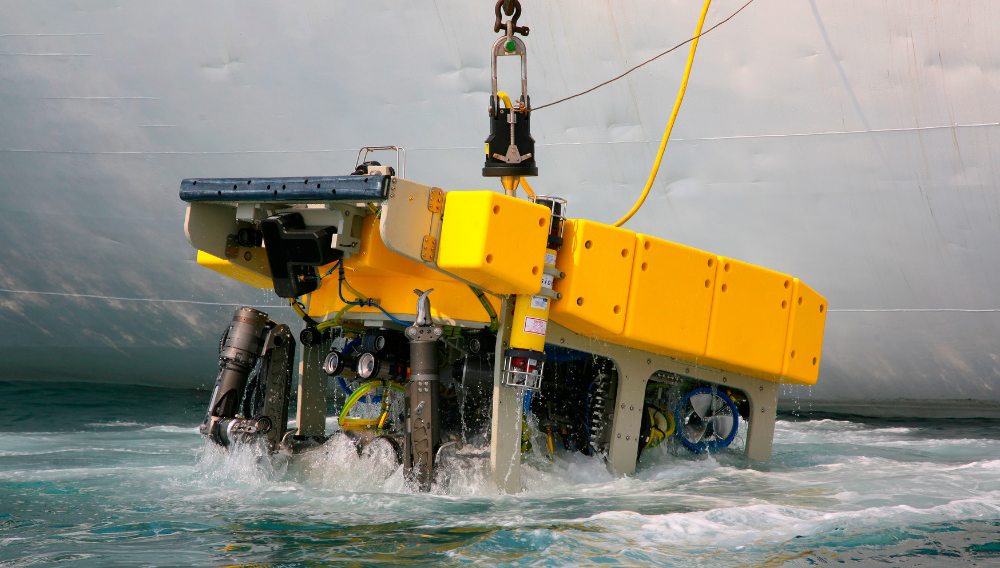
The maritime industry is undergoing rapid change enabled by new on-ship technology that optimizes route management, trims operational costs and improves safety. From autonomous cargo ships to deep-water Remotely Operated Vehicles (ROVs), vessel manufacturers are pivoting to AI-enabled, software-enhanced systems to optimize operations across the global waterways.
This requires new flexibility and agility – which most current designs cannot support – in order for systems to be able to rapidly exchange data from sensors to navigation.
Imagine that one of your engineers identifies a way to improve ROV efficiency by 5-10% by incorporating an AI algorithm that leverages real-time temperature, pressure, and flow rates. In a message-based architecture, incorporating this new feature would be cost-prohibitive.
Traditional messaging systems such as Client/Server, Message-Oriented Middleware (MOM), or Service-Oriented Architecture (SOA), connect applications directly to each other. This approach works well as long as systems don’t change. However, in this hypothetical AI algorithm extension, there is no flexibility to just “add on the API.” Developers would need to recode and redesign each point-to-point communication in order to receive and send for new data.
To stay nimble in the emerging world of AI-enabled systems, incorporating new functionality within an older architecture is proving to be too costly and time consuming.
For smart physical systems, the key to intelligence is not just access to data, but real-time data flow. The required timing, reliability, and security of that data flow are essential; if you miss the deadline, the data becomes useless for real-time control.
The New Perspective: Data at the Core of the Vessel
To better manage dynamic data flow across autonomous and AI-enabled vessels requires a data-centric architecture. For the ROV and maritime sectors, a data-centric architecture solves critical innovation challenges, enabling the evolution toward intelligent physical systems.
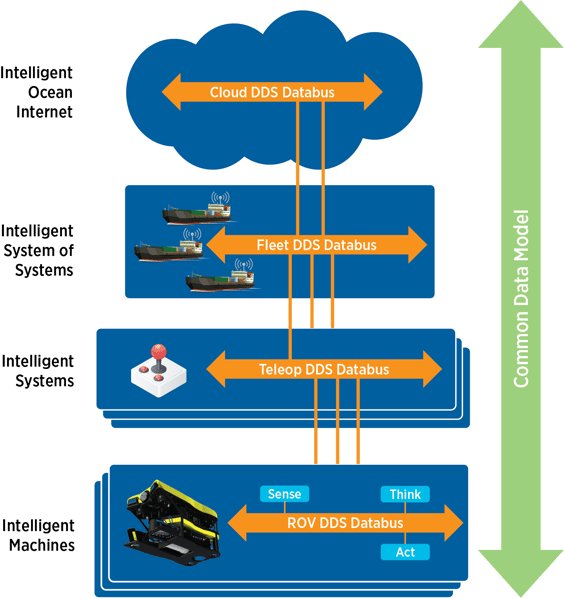
Figure 1: A data-centric architecture enables flexible, dynamic data flow across a common data model.
A data-centric architecture based on the Data Distribution Service standard (DDS™) acts as the nervous system for Physical AI. It securely and reliably connects the intelligence (algorithms) to the sensors and actuators. By providing a common data model across the entire maritime operation – from subsea machines to topside control to fleet management and the cloud – manufacturers can future-proof the system architecture and avoid vendor lock-in. Moreover, DDS also provides a foundation for the U.S. Navy's Unmanned Maritime Autonomy Architecture (UMAA) framework.
Data centricity refers to an architecture where data is the primary and permanent asset, and applications are evolving elements that come and go. This approach treats operational data – which is real-time and often deadline-sensitive – like a virtual "in-memory" database or databus.
In this framework, applications are decoupled, communicating with each other through a common data model vs. traditional point-to-point APIs. The data model itself becomes the interface, defining What (Content and Type), How (Quality of Service, including timing and security), and Who (Discovery of Topics and Partitions). This standards-based approach, enabled by DDS, sends and receives the right data to the right place at the right time.
Data-Centricity in Practice: Use Cases for ROV Development
Let’s look at a few examples:
Case Study 1: Increasing Levels of Automation
When one manufacturer sought to automate complex underwater maintenance tasks performed by their ROVs, they faced a classic integration roadblock. Initially, the system was built around one-to-one manual control.
By adopting a data-centric architecture, the company first duplicated their manual system on the RTI Connext databus, immediately allowing them to log and extract crucial operational data in parallel to the manual control stream. Once they had the data, they developed a sophisticated automated control algorithm (for tasks such as tool retrieval) and installed it as a new application on the network without having to change anything on the underwater vehicle.
This decoupling enables the sophisticated orchestration needed for autonomy. The infrastructure handles command arbitration using ownership strength. For example, manual control can be set as the default, with collision avoidance having higher ownership strength to automatically override it, and a new AI navigation algorithm set at the lowest strength. This capability, crucial for evolving autonomy, is handled by the infrastructure, allowing your software engineers to focus purely on the application logic.
Case Study 2: Simplified Sensor Integration
A major hurdle in ROV development is the constant integration nightmare: each new sensor requires a different API, demanding costly time and money to manage disparate data types across multiple vendors. This backwards approach of having sensor vendors define the data model for the ROV was short-sighted. One company, Voyis, tackled this challenge by championing the use of the DDS standard. It uses Connext to provide the DDS-conforming sensors that establish standardized data sharing interfaces, dramatically simplifying integration. This standardization not only minimizes complexity but also enables greater reliability and autonomy by providing built-in Quality of Service (QoS) controls to guarantee data delivery and define system behavior.
This approach allows systems to instantly plug-and-play new sensors, providing the flexibility to easily integrate the high-resolution sonar and video data required to shift AI processing sub-sea, addressing the bandwidth choke points of the tether for subsea ROVs.
Even more challenging is integration for Uncrewed Underwater Vehicles (UUVs), which have no tether or cable link to an operator. However, this is where DDS really shines, as it reliably captures and manages sensor information and prioritizes efficient data handling, even in situations where network bandwidth is limited or intermittent.
The Journey Towards Maritime Autonomy
The steps to achieve software-defined, data-centric, AI-enabled maritime autonomy are available today. By making data the central asset and adopting open standards such as DDS, engineers of next-generation ROVs can significantly reduce the cost of integration, unlock continuous innovation, and build resilient, evolvable physical systems that are ready for the next generation of AI-powered operations.
Please visit our website for more information on RTI in Maritime. To learn more about how Voyis is using RTI Connext for autonomous subsea and defence operations, please read this press release.
 Bob Leigh, Senior Director of Commercial Markets, RTI
Bob has been matching market needs and emerging technology for over 20 years as an entrepreneur and technology leader. He has spent his career in small companies and is the founder of two. At each venture he led the charge to create new technologies for emerging markets and disruptive applications. Since joining RTI, Bob has led the development of new commercial markets by understanding the important market trends of the day, and figuring out how RTI’s expertise and technology can be applied to solve these challenges.