 Success-Plan Services
 Darren Porras
 Jennifer Esposito
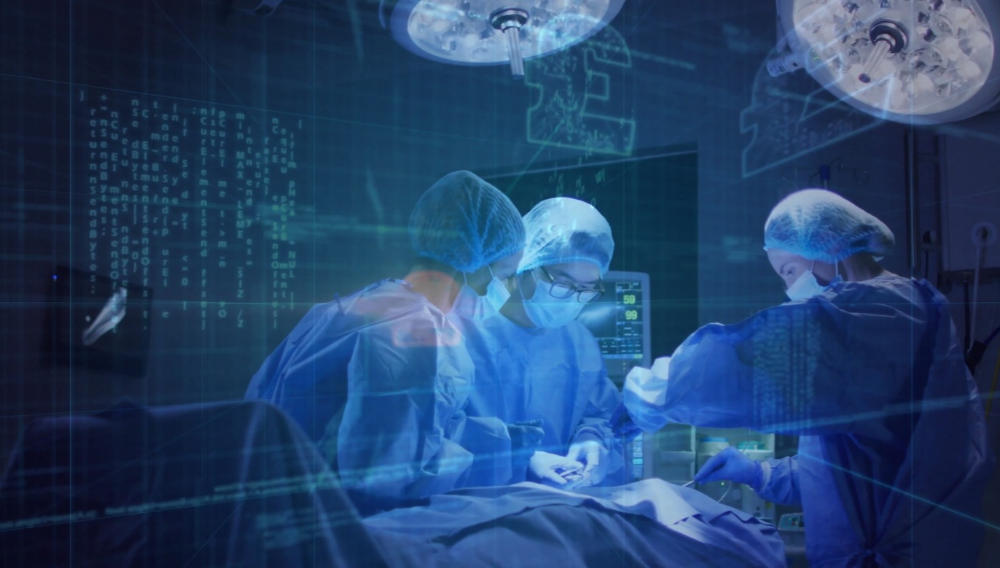
The concept of the modern ‘Connected OR’ is undergoing a fundamental transformation, as new advances in AI, surgical robotics, imaging, networking, and edge computing have finally created the conditions necessary to make that vision achievable. Recently we participated in a MassMEDIC webinar on Rethinking the Connected OR in a Physical AI World with Software Engineering Leader Patrick Shironoshita to explore why MedTech is at an inflection point and why a data-centric architecture is emerging as the essential foundation for the next generation of intelligent surgical systems. Here are highlights of that discussion.
There is a startling reality in modern operating rooms: They generate enormous amounts of valuable data, yet most of that information remains trapped in isolated systems. As healthcare moves towards AI-enabled workflows, improved clinical outcomes, and increasingly autonomous technologies, organizations must rethink how data is collected, integrated, shared, and acted upon in real time.
The Challenges Facing Today's Operating Room
Despite advances in surgical technology, many operating rooms are fragmented environments. Surgical robots, imaging systems, patient monitors, anesthesia equipment, navigation platforms, and other devices often operate independently with limited interoperability.
This fragmentation creates several significant challenges:
- Clinical teams must manage disjointed systems that reduce workflow efficiency and distract from patient care
- Lack of integration introduces patient safety risks due to required cross-checking and increased burden on the clinical team
- Valuable procedural, device, and patient data is trapped in data silos and cannot be used for analytics that assist with decision-making pre-operatively, intraoperatively, and post-operatively
In the webinar, the audience identified legacy systems and architecture as the largest barrier to achieving a connected OR, followed closely by interoperability challenges. Many healthcare organizations operate a mix of new and aging technologies, making standardization difficult. While data may exist throughout the environment, accessing and integrating that data remains a major obstacle.
Beyond lost innovation opportunities, this also poses patient safety concerns. In surgical environments, incomplete or delayed information can impact clinical decisions, workflow efficiency, and ultimately patient outcomes.
Why Physical AI Changes the Equation
| “If we're ever going to be using AI intraoperatively, if we're ever going to enable surgeons to work well with the data they have, we have to synthesize this data and bring it all together.” – Patrick Shironoshita, M.S., Software Engineering Leader. |
Unlike traditional AI applications that operate on static datasets or retrospective analyses, Physical AI depends on continuous streams of real-time information that can interact directly with the physical world through sensors, robotics, devices, and real-time decision-making. For example, an AI system supporting a surgical procedure may need to simultaneously process:
- Surgical video
- Robotic kinematic data
- Image data
- Vital signs
- Sensor data
- Device status
- Patient information
- Ambient OR data (cameras, audio, etc.)
AI can only perform effectively when these information sources are available, synchronized, and accessible. The quality and accessibility of data ultimately determine the effectiveness of intelligent systems.
This creates a shift in thinking. Historically, Medtech focused on deploying devices. In the Physical AI era, success depends on creating integrated ecosystems where data flows reliably and seamlessly across devices, software applications, clinicians, and care settings.
The Business and Clinical Drivers Behind Connected OR Adoption
Several powerful industry trends are accelerating the need for connected operating rooms.
Value-Based Care
As reimbursement models increasingly emphasize outcomes, providers need greater visibility into procedural performance, safety metrics, and treatment effectiveness. Connected environments enable the collection and analysis of surgical data that can drive continuous improvement and demonstrate value.
Patient Safety
The ability to correlate device performance, procedural events, alarms, workflow behaviors, and patient outcomes creates opportunities to identify risks and develop AI-driven safeguards. Better data enables better understanding of what leads to successful outcomes.
Multimodal Data Integration
Healthcare data is not limited to the Electronic Health Record (EHR). Modern clinical environments generate video, images, waveform data, and physiological measurements. AI-enabled applications and systems that integrate and process diverse data streams have the potential to transform patient care with real-time insights and automation.
Expansion of Robotics
Surgical robots have become major generators of procedural data. As robot-assisted platforms become increasingly integrated with a variety of minimally invasive procedures, it creates an opportunity to leverage interoperability with other devices for enhanced operation, guidance, automation, and post-procedure analytics.
Real-Time Edge Computing
Many surgical applications require immediate analysis and response. Vast amounts of data must often be processed, integrated, and acted on at the point of care, rather than being sent elsewhere for later evaluation. Advanced networking and computing technologies now make this possible.
Remote Care and Telesurgery
Providing greater access to care across distributed clinical environments will help address critical staffing shortages and support underserved populations. Optimized edge-to-cloud data streaming architectures ensure data is streamed reliably and securely to the right place at the right time.
Why Legacy Architectures Fall Short
Many MedTech systems rely on application-centric connectivity architectures.
With this approach, applications communicate by exchanging messages. In this model:
- Applications must know where information is coming from
- Systems become tightly coupled
- Integrations become brittle and difficult to maintain
- Scaling requires increasingly complex custom development
This approach may work adequately for simple environments, but it becomes problematic as systems must scale to integrate with diverse data streams across platforms, devices, and networks. Applications must run seamlessly whether at the edge or in the cloud.
Future operating rooms will require a fundamentally different approach.
The Case for a Data-Centric Architecture
| “The Digital OR will be built on data, not devices. Without the right data foundation, even the most advanced technologies operate in isolation.” – Darren Porras, Senior Market Development Manager, Healthcare, RTI |
A data-centric connectivity architecture places data at the center of the system, rather than individual applications.
Instead of applications directly managing communication with one another, shared data space allows applications to publish, discover, and consume information as needed. Data becomes the common interface that enables interoperability.
This approach provides several advantages:
- Scalability: New applications and data sources can be introduced without redesigning the entire system. AI models, analytics tools, and software services can be added as clinical needs evolve.
- Flexibility: Applications operate independently of specific hardware, operating systems, networks, or deployment environments.
- Interoperability: Edge systems, cloud applications, and AI models all share a live system state. New and legacy applications can integrate seamlessly, enabling software-upgradeable features on existing hardware.
- Reliability: Distributed architectures support redundancy, failover capabilities, and resilient data delivery mechanisms that are essential in clinical environments.
Future-Proofing
Organizations can accommodate emerging technologies such as augmented reality, advanced imaging, autonomous systems, and future AI capabilities without rebuilding the foundational infrastructure. The data-centric model enables organizations to focus their development resources on clinical value rather than infrastructure complexity.
Security by Design
As medical systems become increasingly connected, security can no longer be treated as an afterthought. In healthcare environments, cybersecurity is a patient safety issue. A system cannot be considered safe if it cannot be demonstrated to be secure.
Modern connected OR architectures must therefore incorporate:
- Secure-by-design principles
- Zero-trust security approaches
- Authentication and access controls
- Data-level security protections
- Resilient distributed architectures without single points of failure
Rather than limiting the pace of innovation, a strong architectural foundation allows organizations to pursue more advanced capabilities with confidence.
Looking Ahead
The Connected OR is no longer simply a future vision. The convergence of AI, robotics, imaging, networking, edge computing, and advanced software architectures has created a unique opportunity to transform surgical care.
Data has become the strategic asset underpinning this transformation. Organizations that continue to treat data as a byproduct of devices will struggle to realize the full potential of data-driven healthcare. Those that adopt a data-centric approach will create the data foundation necessary to support real-time intelligence, seamless interoperability, remote procedures, personalized care, and clinical efficiencies.
In the Physical AI era, the defining challenge is no longer generating data. It lies in creating a secure, interoperable, real-time data foundation capable of turning that information into actionable intelligence. The Connected OR of the future will ultimately be defined not by the devices it contains, but by the data ecosystem that connects them.
Listen to the full conversation, or contact RTI to learn how your team can enable the connected OR of the future, today.
About the authors:
 Jennifer Esposito, Board Director at Vivalink, is a recognized leader in augmented reality, spatial computing, AI and IoT, with a strong background of driving innovation in healthcare, life sciences, medical devices and biotech. She is the Founder and CEO of Augmentius, and has delivered business growth and operational success across startups and large organizations such as Magic Leap and GE HealthCare. She also serves on the Advisory Board of RTI. As the former General Manager of Intel's Health and Life Sciences group and the co-chair of key global health initiatives, Esposito has influenced policy and forged partnerships with organizations including the UN, WHO, and US CDC.
 Darren Porras is the Senior Market Development Manager for Healthcare and Robotics at Real-Time Innovations (RTI). Darren has over 20 years of experience in the medical device industry and product development. Prior to joining RTI, Darren was a program manager at Medtronic for Surgical Robotics. Darren has also held program management and software development roles at Philips Healthcare and Integra Radionics spanning medical imaging, image-guided surgery, and cybersecurity.
Darren has a Bachelor of Science in Engineering from Duke University and Master of Science in Biomedical Engineering from the University of Alabama-Birmingham.