 Success-Plan Services
 David Greenberg
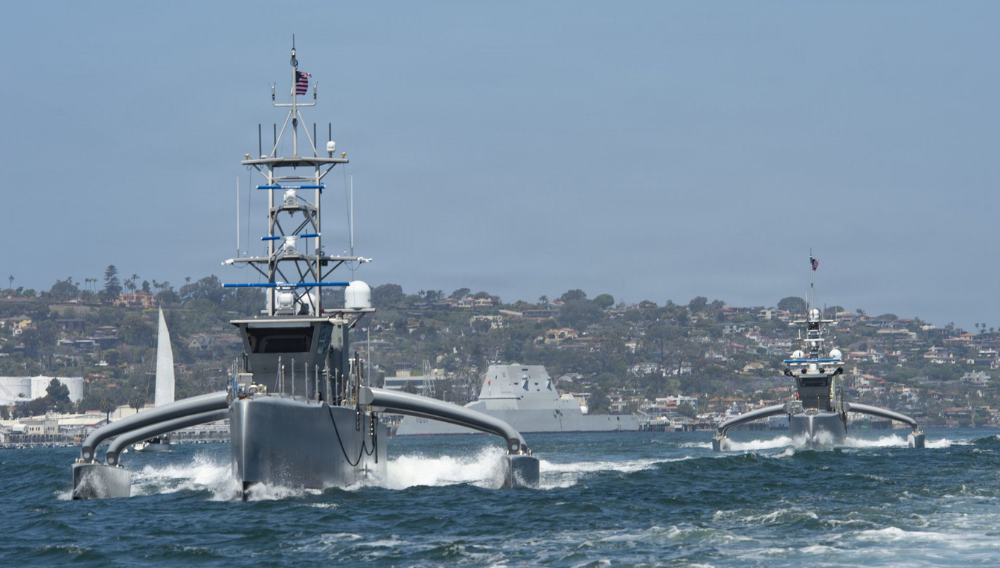
Modern maritime platforms are becoming more capable, more distributed, and more software-defined. Whether the mission involves crewed vessels, uncrewed surface vehicles, undersea systems, or hybrid fleets, the platform is increasingly defined by how well its software, sensors, payloads, autonomy applications, and command-and-control systems work together.
That creates a major challenge for systems integrators.
Today’s maritime platforms are rarely built from a single vendor’s technology stack. A platform may include navigation systems, autonomy software, payload controls, radar, EO/IR sensors, mission planning tools, C2 interfaces, simulation environments, cybersecurity components, and platform management systems from multiple suppliers. Each subsystem may work well on its own. But the real test comes when all of those components need to operate together as one mission system.
That is where many programs run into friction.
The challenge is not simply connecting one subsystem to another. It is building an architecture that allows different vendors to share data reliably, develop in parallel, test earlier, and upgrade capabilities over time without breaking the rest of the platform. As maritime programs move from prototypes and demonstrations to operational systems, this integration challenge becomes one of the biggest sources of cost, delay, and program risk.
For complex deployed systems in particular, the process of enabling multiple vendors with separate subsystems on the same platform to coexist can easily lead to unanticipated integration headaches. At the same time, there is an opportunity for real innovation. If all elements can be integrated seamlessly, then the system can truly become greater than the sum of its parts.
The Limits of Point-to-Point Integration
Many programs begin with point-to-point integration. One subsystem needs data from another, so the teams build a direct interface. Then another subsystem is added, and another custom interface is created. At first, this approach can feel manageable. It is direct, familiar, and often the fastest way to get an early prototype working.
But as the platform becomes more complex, the point-to-point model starts to break down.
Every new subsystem adds another integration burden. Every software update can create new dependencies. Every vendor may need access to other components before they can fully test their own. Instead of moving quickly, teams spend more time managing interface control documents, debugging custom connections, and waiting for other parts of the system to be ready.
The result is an architecture that becomes harder to scale and harder to change.
This matters because maritime systems are not static. New payloads will be added. New sensors will be introduced. Autonomy software will mature. Mission applications will change. Communications systems will evolve. Platforms designed around tightly coupled interfaces can struggle to keep pace with that reality.
A Better Integration Model: Shared Mission Data
A more scalable approach is to treat data as the integration layer.
Instead of requiring every application to connect directly to every other application, a data-centric architecture allows subsystems to publish the data they produce and subscribe to the data they need. The focus shifts from individual connections to shared mission data.
For a maritime platform, this means payloads, autonomy applications, sensors, C2 systems, simulation tools, and platform controls can all interact through a common data-sharing foundation. Each subsystem can be developed with a clearer understanding of what data it needs, what data it provides, and how that data should behave across the mission environment.
This model does not eliminate integration work. It simply makes integration more manageable.
By defining common data interfaces, systems integrators can reduce custom coupling between vendors. Teams can develop against shared data models, test earlier, and validate behavior before everything is physically brought together on the platform. That can help reduce late-stage surprises and make it easier to introduce new capabilities over the life of the program.
Why This Matters for Multi-Vendor Programs
The ability to support parallel development is especially important in maritime programs. Different vendors often work on different schedules, with different development environments and different levels of access to the final platform.
If every team needs every other subsystem to be available before meaningful testing can happen, integration becomes a bottleneck. But with a shared data interface, teams can simulate inputs, validate outputs, and test system behavior earlier in the lifecycle.
That helps systems integrators answer critical questions sooner:
- Can the autonomy software consume sensor data correctly?
- Can the payload publish status and health information in a usable way?
- Can mission applications receive the right data at the right time?
- Can simulation environments mirror the operational data flows?
- Can new subsystems be added without rewriting large parts of the architecture?
These questions are not just technical. They affect schedule, cost, risk, and long-term platform adaptability.
Building for Change, Not Just Initial Integration
Modern defense has reached a point where development speed alone is not enough. New capabilities must also be integrated quickly into complex, multi-vendor systems.
The most important integration question is not whether a platform can be made to work once. It is whether the platform can continue to evolve, support new mission applications, and adapt to changing operational requirements. Scaling maritime systems requires vendors to work together through a rapid, continuous integration cycle that supports modernization far into the future.
A data-centric approach gives programs a stronger foundation for that kind of change. By decoupling applications from one another and focusing on shared data, systems integrators can make the platform less dependent on brittle, one-off connections. New capabilities can be introduced through defined interfaces rather than forcing teams to rebuild the architecture each time the platform changes.
Open data-sharing standards such as Data Distribution Service (DDSⓇ) can support this approach by providing a common interface across distributed applications, vendors, and operating environments. The broader value is not simply connectivity, but reduced integration friction, earlier testing, greater interoperability, and an architecture that can evolve without disrupting existing systems.
The Path Forward
As maritime platforms embrace the software-defined future, integration strategy becomes mission strategy. Programs that rely on fragile, custom interfaces may be able to move quickly in early demonstrations, but they often face greater challenges as they scale toward operational deployment.
The next generation of maritime systems will need to bring together payloads, sensors, autonomy software, platform controls, C2 applications, and simulation environments from multiple vendors. The programs that succeed will be the ones that make integration repeatable, testable, and adaptable.
That starts with a simple shift: stop treating integration as a collection of one-off connections and start treating shared mission data as the foundation of the platform.
This allows teams to focus on feature sets and capabilities that effectively support modern warfighters on the software-defined battlefield.
Contact RTI today to find out how our experts can help you optimize maritime autonomy.
The appearance of U.S. Department of War (DoW) visual information does not imply or constitute DoW endorsement.
About the author:
 David Greenberg is a Staff Application Engineer at RTI with over 10 years experience in building and developing solutions in the maritime autonomy space.