 Success-Plan Services
 John Breitenbach
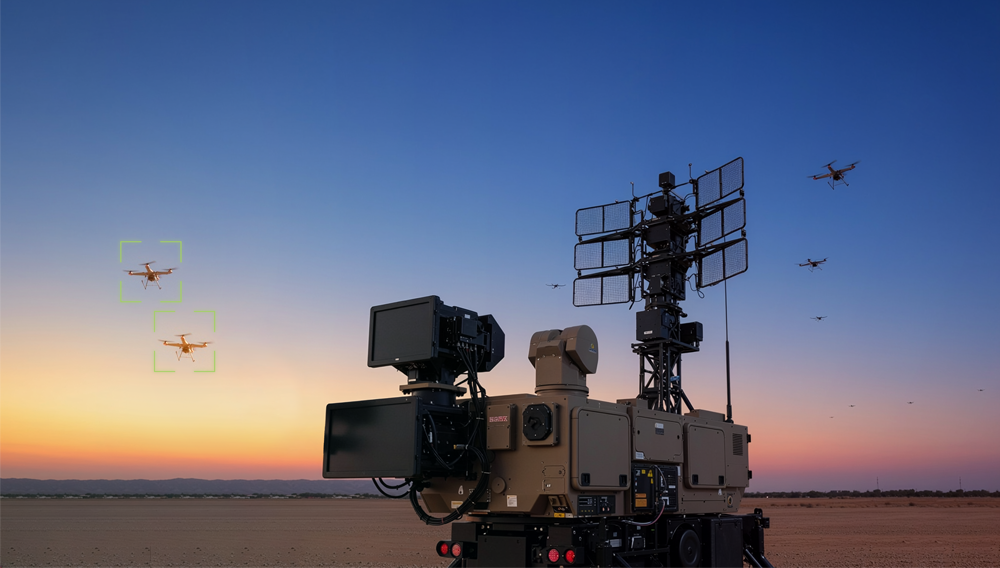
Artificial Intelligence is quickly becoming one of the defining technologies in modern Counter-Unmanned Aircraft Systems (C-UAS). From identifying threats to recommending responses, AI has the potential to help operators react faster than ever before. So what’s the hold up?
AI itself isn't the bottleneck. But it is clearly more complicated than “set it and forget it.”
Imagine this scenario
Twenty-five drones enter defended airspace almost simultaneously, and within seconds, radar detects 25 tracks, RF sensors identify 17 potential control signals, EO/IR cameras confirm 14 visual contacts, and acoustic sensors detect multiple drone signatures.
Meanwhile, Blue Force Tracking reports several friendly unmanned aircraft operating nearby and ADS-B identifies legitimate commercial traffic overhead.
One radar loses line of sight, several drones disappear behind terrain, RF detections begin to fade as aircraft alter their flight profiles. New sensor reports continue arriving every second, so now the challenge isn't just about detecting drones: it's more about deciding what data matters in the moment.
Which tracks represent the same aircraft? Which threats matter most? Which information should we prioritize? And finally, what is the appropriate response?
AI can help answer these questions, but only if the underlying system can first transform hundreds of disparate data points into a trusted, decision-ready picture. The real challenge is now clear: it’s about the quality, the relevance and the context of the information as it applies to the total threat landscape.
More Data Doesn’t Automatically Create Better Decisions
Modern C-UAS architectures are becoming increasingly sophisticated. Radar, RF sensors, EO/IR cameras, acoustic sensors, intelligence feeds, and autonomous platforms all contribute valuable information.
The Joint Interagency Task Force 401’s book Small Drones, Big Problems: A First Principles Approach to Countering-UAS reinforces the notion that understanding these data sources must take priority over simply adding more. At first glance, this increased data flow is a positive shift, until that flow begins inundating Command and Control (C2) systems with more information than they were designed to process. That introduces operational fragility at exactly the moment the mission requires faster and more confident decisions.
Simply sending all that data to an AI algorithm does not necessarily make the system smarter. It can create duplicate tracks, conflicting reports and additional processing at exactly the moment faster decisions are needed.
AI Needs Context to Make Better Decisions
Artificial Intelligence excels at processing high volumes of data, but first, it has to know which information deserves attention. Without that context, AI faces the same challenge as a human operator: duplicate tracks, conflicting observations, stale reports, and incomplete information. Questions that need to be answered in real time include:
-
Are these three tracks actually the same drone?
-
Which sensor has the highest confidence?
-
Has this target already been classified?
-
Is this aircraft friendly, hostile, or unknown?
When milliseconds matter, computing resources can’t be wasted reconciling information instead of supporting the decision.
The advantage is not simply deploying smarter algorithms. It is delivering better information to those algorithms in the first place.
Same Swarm. Different Data Architecture. Different Outcome.
Let's go back to those 25 drones in our scenario earlier.
Traditionally, every sensor reports independently: radar generates one track, RF generates another, and EO/IR identifies a third.
Operators and AI applications must reconcile those observations while the situation continues to change. Valuable time is spent determining what is happening before anyone decides what to do.
Now imagine the exact same attack with a different data architecture. Instead of passing around raw sensor feeds, the system continuously builds a shared operational picture.
Duplicate observations are automatically correlated, confidence scores update as new information arrives, and threats are prioritized based on mission context. If one sensor loses visibility, others maintain track custody and instead of receiving dozens of alerts, operators receive decision-ready information.
The swarm hasn't changed. The AI’s processing power hasn't changed. The operator hasn't changed. What changed is the quality and context of the data provided.
That distinction is critical, and it becomes increasingly important as C-UAS moves from individual point solutions toward layered, distributed defense. More sensors, AI capabilities and effectors must operate as a coordinated system, while continuing to evolve as threats and technologies change.
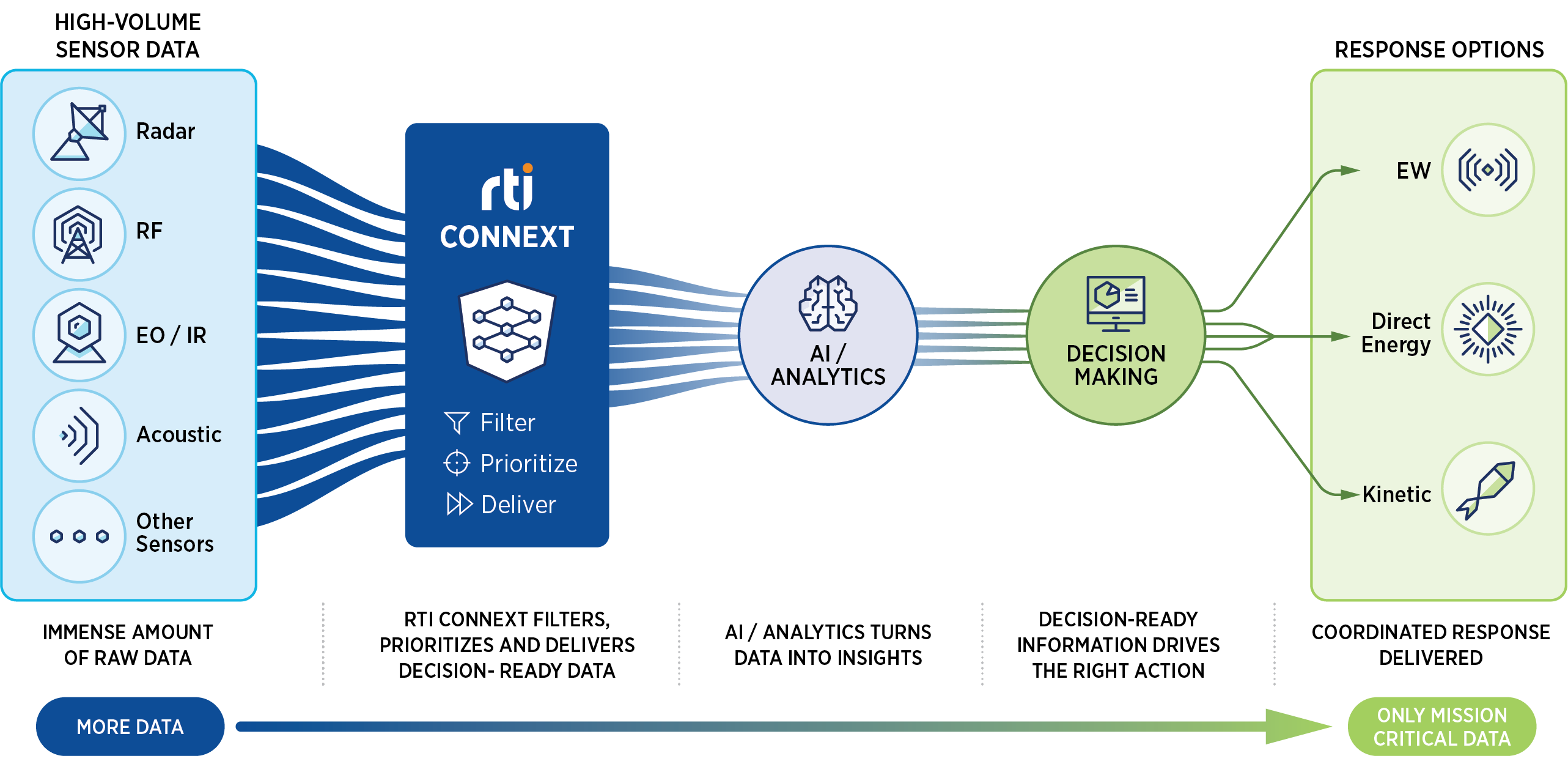
Figure 1: From detection to decision and response: real-time data flow for C-UAS
Click diagram to view larger
The Data Architecture Becomes Part of the AI Strategy
When people discuss AI integration, the focus is usually on algorithms and computing power. But AI also depends on receiving trusted information quickly enough to matter.
That means delivering the right data, to the right application, at the right time, and with the right priority. Not every sensor update needs to be shared with every system, not every operator needs every piece of information, and not every piece of data deserves equal attention.
As C-UAS missions become more distributed, resilient data sharing becomes just as important as detection itself. Systems must continue exchanging trusted information, even when communications are degraded, sensors become unavailable, or new platforms are introduced during an operation.
The underlying data architecture is not simply moving information. It helps determine whether AI and operators receive the information they need in time to make a decision.
The Future of AI Starts Before the Algorithm
The defense industry often asks how AI can make Counter-UAS systems smarter. A better question may be: How do we give AI better information?
As C-UAS becomes more layered and distributed, maintaining that context and delivering mission-relevant information becomes increasingly important. Operational advantage will come from transforming massive volumes of observations into trusted, prioritized and decision-ready information that enables AI and human operators to act quickly and with confidence.
Because ultimately, AI isn't the differentiator. Decision-ready information is.
As autonomous threats continue to evolve, the advantage will go to C-UAS systems that can continuously incorporate new capabilities and deliver the right information quickly enough to move from detection to decision and response.AI becomes more effective, operators become more confident, and the entire Observe–Orient–Decide–Act cycle naturally accelerates.
In modern Counter-UAS operations, that may be the greatest advantage of all.
Connext is used in a range of U.S. missile defense and C-UAS platforms, including Aegis, IBCS, THAAD, and SPY-6 radar, and is trusted by 45 of the world’s top 50 defense contractors.
Read our latest capability brief, RTI in Counter-Unmanned Aircraft Systems (C-UAS), here.
About the author:
 John Breitenbach, Director Aerospace & Defense Markets, RTI
John Breitenbach is Director of Aerospace & Defense Markets for Real-Time Innovations. He has over 30 years of experience designing software for intelligent machines. He’s worked on industrial, medical, consumer and military products – everything from artificial hearts to autonomous vehicles to elevators.