 Success-Plan Services
.jpg) Bob Leigh
Bob Leigh
Most companies today have an AI strategy built on strong ambition, but a data strategy built on wishful thinking.
While the value of AI and Agents may be clear for your organization, the difference between a theoretical return and the realization of the promised benefits will in large part hinge on access to quality data. Because these days, just "having AI" is not enough and Physical systems rely on rapid access to timely quality data. The challenge is ensuring that the underlying architecture can handle the demands of real-world systems, while also providing your agents with an abundance of information on which to act.
We have entered an era of "Physical AI," where the sustainable competitive advantage is no longer how smart your algorithms are, but how effectively your data can move through a digital ecosystem to turn those thoughts into action and insights. When it comes to AI, it’s the data that generates the real value.
|
“AI strategy is ambition, but data strategy needs be the reality and the two need to be able to converge.” |
Barriers to Innovations
Most Physical systems today are primarily architected for the machine’s requirements. The risk of getting a complex machine to market is so high, that all focus ends up on that singular task – and you architect around a build-for-purpose system (e.g., the car, the robot, the tractor). Once you are launched, guess what happens? A data silo is now the flagship product.
This is one of the greatest and often hidden drains on innovation budgets, the fragmentation of your ecosystem. To overcome it requires a massive cost in writing expensive code, such as custom "bridges" to force disjointed systems to communicate. You could end up spending 80% of your budget on software and system integration. You aren't paying for new features; you are paying to fix past architectural limitations. And with the rise of Physical AI and rapidly evolving technology landscape, fixing this legacy architecture is a matter of survival for any company that provides software to the market.
This is no way to build market advantage and it does not support the creation of a data flywheel – a self-reinforcing system where data drives your competitive advantage, and the greater advantage you have, the more valuable the data generated.
A Way Forward: Data Centricity
To avoid this innovation barrier, we have to rethink how we build the data architecture for physical systems. Traditional message-centric architectures send a piece of data from Point A to Point B with no context. But Physical AI needs so much more than that. It needs context, it needs to know that it is getting the latest data, and above all it needs flexibility. It needs an architecture built on the concepts of data centricity, where your system communicates over a nervous system connecting any application, agent, sensor, or sub-system so they are able to access data across the entire network. Think of it like the human body. Your brain doesn't have to ask your hand where it is; the data is constantly available on a shared nervous system. In a data-centric architecture, the data itself is at the center of the design. Every application and sensor connects to a shared databus where they can subscribe to exactly what they need, and get it when they need it.
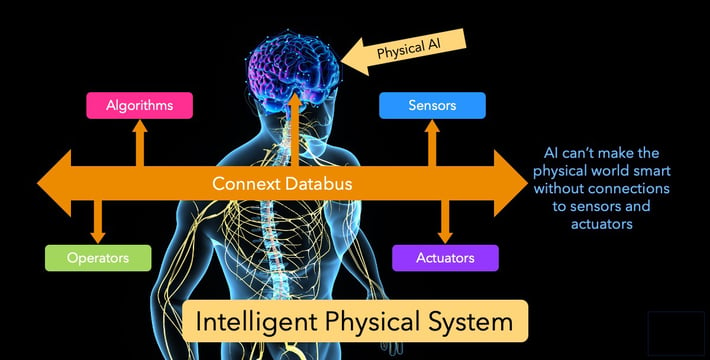 Figure 1 - RTI: The nervous systems for Physical AI™
|
A data-centric design allows data to flow anywhere it is needed
|
Intelligent Data Awareness and Enterprise Integration
We are rapidly moving to a point where application development is almost free, and will be entirely custom to the specific use case, customer, and system. This is where the data flywheel becomes foundational. To support this new world where we can deploy applications nearly instantly, you need to have well-defined interfaces between systems with access to the right data. Both of these problems can be solved with a unified data model and shared global data space that spans across your business operations; between every sensor, edge system, and into the back-end – whether it is on-prem servers or public cloud.
This isn't a new architecture. Back in the hey-day of the Industrial Internet of Things, it was a model for complex distributed systems. What has changed is the urgency and imperative, driven by advances in computing architectures and ubiquitous connectivity, and Physical AI as the driving force of change. Together these things make it possible and necessary to implement a data strategy into your business to leverage the only competitive advantage left, the data, and intelligence, currently locked in your systems. And integrate operational edge data with enterprise systems seamlessly, unifying the Edge and the Cloud.
RTI has extensive experience implementing data centric architectures for distributed, embedded, real-world systems. With the rise of Physical AI, our product, RTI Connext, is the right Physical Data Streaming platform to connect your systems seamlessly from edge, through back-end and cloud applications. Your systems, running as one. Here’s how to make this real for a few of my favorite industries.
Where’s My Connected Car?
The promise of the Connected Car, where your vehicle is seamlessly integrated with back-end services, has proved to be a challenge for the industry despite the clear benefits to both the consumer and OEM. Now, with practical AI solutions for predictive maintenance, driver safety, and customer experience, the need for flexible and scalable access to date has never been more urgent. The challenge has been the traditional supply chain, which is geared around defining all functionality before the vehicle is built, but this can’t be true going forward. Customer tastes change, new market opportunities arise, and the value of these services needs to be proven in the real world. By definition, services should be evolving and upgraded over time. However, without a data-centric architecture, access to the data to build such systems is a big challenge and innovation barrier.
The Future of Digital Healthcare
In a hospital setting, success is not just about a "smart" robot; it is about the real-time flow of patient data between monitoring, diagnosis, and treatment tasks. A data-centric approach standardizes data acquisition from connected medical devices. By incorporating AI, these systems enable solutions such as providing anatomical and instrument location data for minimally invasive procedures. The use of real-time video data and AI in the OR provides surgeons with guided assistance on blood flow, informing clinical decisions and reducing medical errors during surgery. Though AI systems are in their infancy, they will need to evolve quickly, so enabling these capabilities with flexible access to data is key to long-term success.
Smart Factories
Smart factories are highly complex machines, but today most are built to handle a very specific product mix, and changing that product is time-consuming and expensive. For example, in a typical industrial robotics project, only a third of the budget is spent on hardware, while the remaining funds tend to be consumed by custom engineering and complex integration. Instead, if a factory was built around the data, and that data is then available to the factory’s digital twin using the same data models and software architectures. Then new products and processes could be tested and introduced seamlessly, interchangeably testing and deploying applications between the virtual and the real world.
Smart Cities
Whether you’re Improving traffic flow, adapting to real-world changes, or testing new strategies that will improve the livability of a city – it’s all about data. The right architecture for a smart city models the city as data first, and then applies that model consistently across any device, sensor, application or system integrated into the civic infrastructure. Devices that each have their own standard, or data model, is the old way of designing hardware. A data-centric approach to city operations, that easily integrate new devices, systems, and applications, is the only way to succeed.
Systems That Run as One
Ultimately, the goal is to build a system that is fast, flexible, and allows simplified access to the right data – a platform where your business can truly reach its potential because it has a world-class nervous system to support it. By implementing a data-centric foundation with RTI Connext, you are de-risking your future and establishing the architecture that will support a data strategy that re-enforces your competitive advantage – your data flywheel. It’s a way to move past the fragmentation and the silos, and finally allow your systems to run as one.
If you are ready to stop paying high integration costs and start leveraging your data to build a competitive advantage, the first step is an architectural shift. Come talk to RTI – we’ll help you stop building silos and start building the future of Physical AI together.
For more on Physical AI and autonomous systems, please click here.
About the author:
 Bob Leigh, Senior Director of Commercial Markets, RTI
Bob has been matching market needs and emerging technology for over 20 years as an entrepreneur and technology leader. He has spent his career in small companies and is the founder of two. At each venture he led the charge to create new technologies for emerging markets and disruptive applications. Since joining RTI, Bob has led the development of new commercial markets by understanding the important market trends of the day, and figuring out how RTI’s expertise and technology can be applied to solve these challenges.